
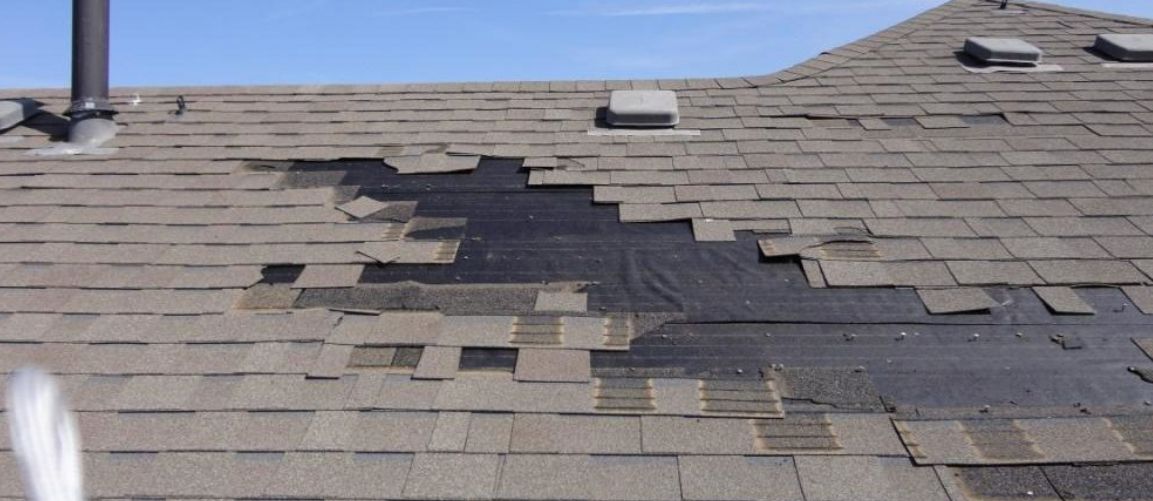
Roof Problems in West Michigan
Roof Wind Damage: Signs, Causes & Urgency
West Michigan sits directly in the path of wind coming off Lake Michigan, and those gusts are hard on roofs. But here's the thing most homeowners never hear: a properly sealed shingle roof is built to take far more wind than we ever get. When shingles come off in a 50 mph gust, the wind didn't beat the shingle. It found a seal that was never there.
This page explains how wind actually damages a roof, what to look for after a storm, why it's urgent, and what to do next. If you already know your roof took a hit, see our wind damage repair service.
Why Lake Michigan Winds Punish Roofs
Grand Haven, Holland, Grand Rapids, Rockford, Ada. The lakeshore and well inland face some of the most sustained wind in the state. With no landmass to slow them, storm fronts gather speed over open water and hit the shoreline hard, and the gusts carry inland. West Michigan sees wind advisories with 45 to 60 mph gusts several times each spring and fall, with the occasional severe event pushing higher.
Now the part that matters. Modern asphalt shingles are tested to two ASTM standards. Under ASTM D3161, a fan test, the top rating is Class F at 110 mph. Under ASTM D7158, an uplift test that measures how much force it takes to break the sealant bond, the top rating is Class H at 150 mph. Every shingle we install carries the top rating under both. And when the Insurance Institute for Business & Home Safety tested real installed panels from GAF, CertainTeed, Owens Corning, and Malarkey, properly sealed shingles held through 120 to 150 mph before failing.
So why does a roof lose shingles at 50? Because the rating assumes every shingle is sealed and nailed to spec. In the real world, that's the part that fails. A seal that never activated because the roof went on in cold weather and nobody hand-sealed it. Nails driven too high, so the shingle below is held by nothing. Sealant that's aged out after fifteen years of freeze-thaw. Any one of those, and a shingle that could take 150 mph comes off at 50. The wind is just the messenger.
How High Winds Lift Shingles and Flashing
Uplift at the Edges
Wind doesn't push a roof. It pulls. As gusts race up the slope and over the ridge, they create suction along the eaves, rakes, and ridges. That lift peels shingle tabs upward and, if the seal is weak, breaks it. Once one seal is broken, the next shingle up is exposed.
Repeated Flexing and Fatigue
Even when a shingle doesn't blow off, hours of flapping in a windstorm fatigues the asphalt and cracks the seal. The shingle looks fine from the ground but it's no longer bonded, and it will come off in the next storm or the one after.
Flashing and Ridge Cap Failure
Metal flashing at chimneys, walls, and valleys, plus the ridge and hip cap shingles, take the hardest hit. Once wind loosens a fastener or lifts a flashing edge, wind-driven rain follows the opening straight to the deck.
Debris Impact
West Michigan storms carry branches, patio furniture, and torn shingles from the neighbor's roof. Flying debris gouges, punctures, and knocks tabs loose. A single missing shingle exposes the underlayment to the next rain.
Signs of Wind Damage to Look For
After a windstorm, walk the property and look at the roof from the ground with binoculars. Don't climb up. Watch for:
- Shingles missing entirely, leaving dark or bare patches
- Curled, creased, or lifted shingle tabs that no longer lie flat. Creasing is the one that matters most. A crease across a tab means it was lifted and folded back, and it's not sealed anymore even if it's lying flat again
- Shingle granules collecting in gutters and downspouts
- Bent, loose, or missing metal flashing at chimneys and walls
- Exposed or popped nail heads
- A damaged, displaced, or missing ridge cap along the peak
- Shingle debris in the yard, driveway, or landscaping
- New water stains on ceilings or in the attic after high wind
Some wind damage hides in plain sight. A shingle can be unsealed and lifting without a single tab missing. Our inspectors check for that by hand, lifting tabs on each slope to see if the seal is intact. Our inspectors are Haag Certified in wind and hail damage assessment for residential and commercial roofs, and that inspection is what an adjuster will want to see. If you saw strong wind and aren't sure, get it looked at.
Why Wind Damage Is Urgent
Water Finds the Opening Fast
A lifted shingle or loose flashing is an open door for the next rain. Lake-effect systems bring wind and rain together, so a roof compromised on Tuesday can be leaking into the attic by Thursday.
Small Damage Spreads
One blown-off shingle exposes the seal on the one below it, and the next gust peels a whole course. Wind damage doesn't stay contained. It unzips across a slope over successive storms.
Insurance Timelines Matter
Your policy sets a deadline for reporting storm damage, and the longer you wait, the harder it is to tie the damage to the event. Read your policy now. Documenting quickly protects the claim.
What to Do After a Windstorm
- Stay on the ground. Inspect from a safe distance. Never climb a wet or damaged roof.
- Photograph everything: missing shingles, debris in the yard, interior water stains.
- Note the date and, if you can, the reported wind speed of the storm.
- Contain interior leaks with a bucket and move valuables away from drips.
- Schedule a professional inspection before the next system moves in.
From there, Stellar Roofing Company can move straight into wind damage repair: resealing tabs, replacing shingles and flashing, and restoring the roof's wind resistance. And if the inspection turns up a roof full of shingles that never sealed, we'll tell you that too, because it means the next storm is going to do the same thing.
Active Leak or Exposed Roof? Don't Wait.
If wind has torn shingles free and the deck is exposed, or water is already coming in, every hour counts. Stellar Roofing Company provides emergency roof repair throughout West Michigan. Call now.
Wind Damage Is Often Part of a Bigger Storm
West Michigan storms rarely bring wind alone. The same front that lifts your shingles can drop hail, dump rain, and send branches onto the roof. If your home was hit by a broader severe weather event, wind is usually one piece of the picture.
For a full assessment and claim support after hail, wind, and severe weather, see our storm damage roof repair page. When the damage is isolated to wind-lifted or missing shingles, our wind damage repair service restores the roof without a full replacement.
The smart move after any windstorm:
Roof Wind Damage Questions
What wind speed causes roof damage in West Michigan?
Less than you'd think, and not for the reason you'd think. Modern shingles are rated to 110 mph under ASTM D3161 Class F and 150 mph under ASTM D7158 Class H, and independent testing by the Insurance Institute for Business & Home Safety confirms properly sealed shingles hold well past 120 mph. West Michigan gusts run 45 to 60 mph. So when shingles come off, it's almost never the wind exceeding the shingle. It's a seal that never bonded, nails driven wrong, or a roof old enough that the sealant has given up. Those are the things we look for.
How can I tell if my roof has wind damage?
From the ground: missing, curled, or creased shingles, bent or missing flashing, exposed nail heads, a damaged ridge cap, shingle debris in the yard, granules in the gutters, and new water stains inside after a storm. Some damage is invisible from below. A shingle can be unsealed and lifting without falling off. Our inspectors check the seal by hand, slope by slope. That's the only way to be certain.
Is wind damage an emergency?
It can be. If shingles are gone and the deck or underlayment is exposed, or water is coming in, treat it as one and call. The next rain will follow the opening inside. Even without an active leak, wind damage should be inspected and fixed quickly, because a small lifted section unzips further in the next storm.
Does homeowners insurance cover roof wind damage?
Most homeowners policies cover sudden wind and storm damage, though coverage and deductibles vary and your policy sets the reporting deadline. Document everything with dated photos, note the storm date, and report it promptly. Our inspectors are Haag Certified in wind and hail damage assessment. We document the damage the way an adjuster expects to see it and walk through the process with you.
Should I repair or replace a wind-damaged roof?
Depends on how widespread it is and the roof's age and condition. When damage is isolated to a few lifted or missing shingles and the deck is sound, a targeted repair restores wind resistance for a fraction of the cost. If the roof is older, has repeated wind damage, or the inspection shows shingles across the roof that never sealed, replacement may be the better long-term value, because the same thing will keep happening. A free inspection gives you the answer.
Can I inspect the roof myself after a storm?
From the ground only, ideally with binoculars. A storm-damaged roof is slick, structurally uncertain, and dangerous to walk. Note what you can see, photograph it, and let a professional handle the close inspection. Stellar Roofing Company offers free roof health inspections throughout West Michigan.
What This Page Cites
- ASTM D3161, Standard Test Method for Wind Resistance of Steep Slope Roofing Products (Fan-Induced Method)
- ASTM D7158, Standard Test Method for Wind Resistance of Sealed Asphalt Shingles (Uplift Force/Uplift Resistance Method)
- Insurance Institute for Business & Home Safety, "Wind Uplift of Asphalt Shingles: Sensitivity to Roof Slope and Installation Season," April 2017. ibhs.org
- Michigan Residential Code, Section R905.2.6.1, Classification of Asphalt Shingles