
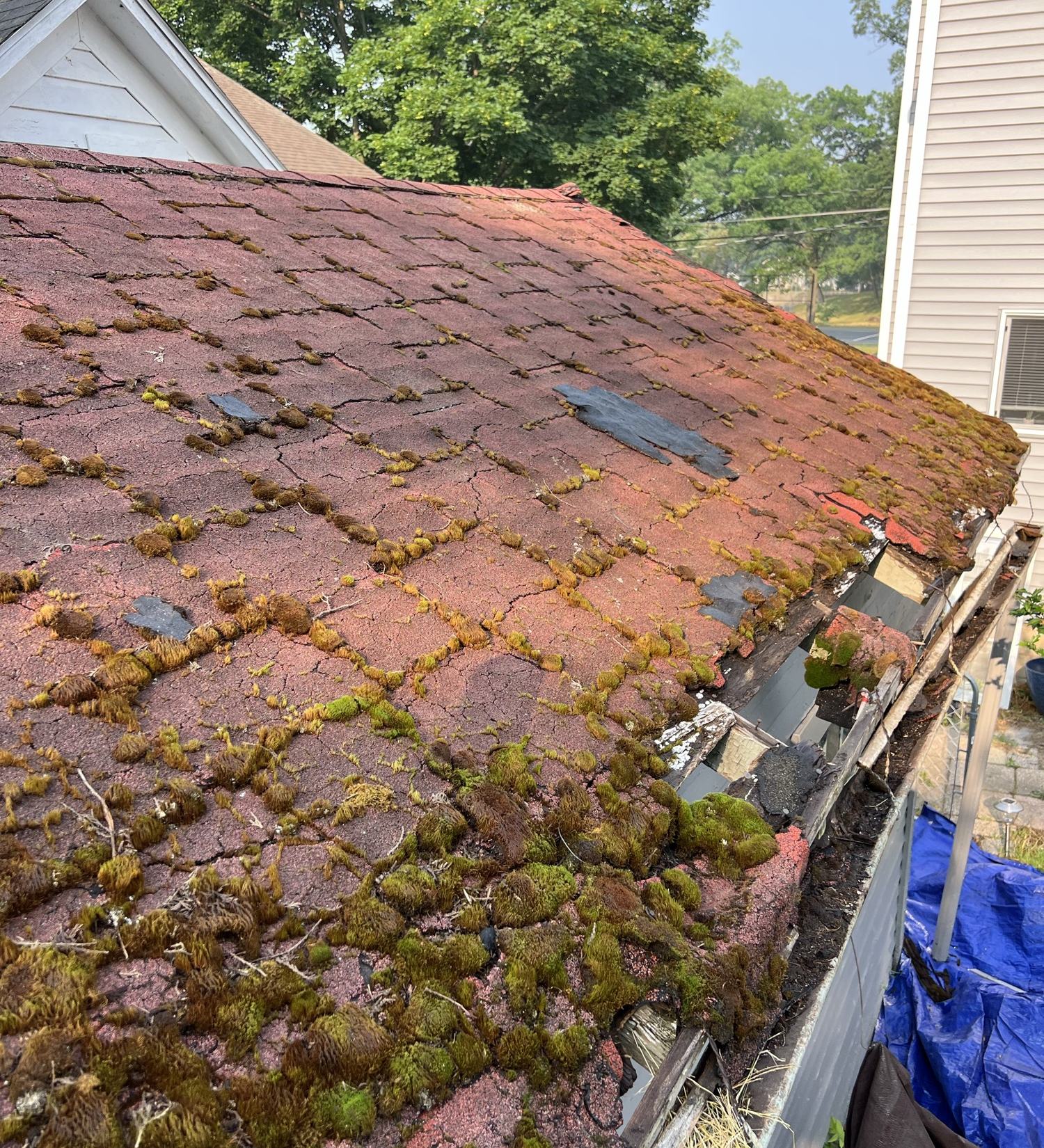
Roof Problems in West Michigan
Signs Your Roof Is Aging Out
Roofs don't fail overnight. They wear out slowly, and the signs show up long before the ceiling drips.
Here's how to tell whether your West Michigan roof is just older or actually near the end, what makes the difference, and what to do about it.
How Long a Roof Really Lasts Here
Most asphalt shingles are rated for 20 to 30 years. Most West Michigan roofs start showing real wear at 15 to 20. That gap has a reason. Our climate is hard on roofs. Freeze-thaw pries at every seam, ice dams back water under the shingles, lake-effect snow sits on the deck for months, and summer UV cooks the oils out of the asphalt. A roof that might see 30 years in a mild climate often ages out sooner in Grand Rapids, Holland, Ada, and along the lakeshore.
But the shingle is only about 40 percent of the roof. The other 60, the ventilation, the ice and water shield, the flashing, the fasteners, the quality of the install, is what decides whether a roof lands at the low end of that range or the high end. We've inspected twenty-year-old roofs that were fine and eight-year-old roofs that were done, and the difference was almost never the shingle. It was what was under it and around it.
Once a roof crosses fifteen years and starts showing the signs below, small problems arrive faster and closer together. Catching that turning point is the difference between a planned replacement and an emergency one after water is already in the walls.
Signs Your Roof Is Near End of Life
Any one of these can show up on a healthy roof. Several together, especially across whole slopes, usually means the roof is wearing out, not just damaged in one spot.
Curling and Cupping Shingles
As shingles age, they dry out and lose the oils that keep them flat. Edges curl up, or the middle cups. Wind-driven rain and snow get underneath. Curling across a whole slope means the system is wearing out, not a few bad shingles.
Bald Spots and Granule Loss
Granules are the shingle's sunscreen. Dark, smooth bald patches on the roof, or granules piling up in the gutters and at the downspouts, mean the shingles are losing their protection and aging fast. Once the asphalt is exposed it cracks like a Michigan road. More on our granule loss page.
Learn MoreDaylight or Sagging in the Attic
Go up on a bright day. Pinpoints of daylight through the deck, water stains on the rafters, or a spongy deck all point to a roof that's been leaking or holding moisture for a long time.
Repeated or Spreading Leaks
One leak is a repair. Leaks that keep coming back, or new stains in different rooms, usually mean the underlayment and flashing have failed across the roof, not in one place.
Moss, Dark Streaks, and Rot
Shade and humidity feed moss and algae that hold moisture against the shingles. On an older roof that trapped moisture rots the deck, especially on north-facing and tree-shaded slopes.
Cracked or Missing Shingles
Brittle shingles crack and blow off in a stiff wind. If you find shingle pieces in the yard after every storm, the material is too dry to keep doing its job. Or the seal never bonded in the first place. Either way, more on our missing shingles page.
Learn MoreA Second Layer of Shingles
Not a sign of wear, but worth knowing. If your roof has two layers, two things are true. First, the next job is a full tear-off, because Michigan code doesn't allow a third layer. Second, that top layer never had a full life to begin with. A second layer over an old one traps heat, sits on an uneven surface, and can lose up to half its expected lifespan compared to the same shingle on a bare deck. If you're not sure how many layers you have, that's one of the first things we check.
Why West Michigan Roofs Age Faster
Understanding why a roof wears out is how you spot trouble early. Here it's usually:
- Freeze-thaw. Water works into tiny cracks, freezes, expands, and pries seams and shingles apart all winter.
- Ice dams. Snowmelt refreezes at the eaves and forces water back under the shingles, rotting the deck from below.
- Lake-effect snow load. Heavy, wet accumulation flexes the deck, works the fasteners, and keeps the roof cold and damp for months.
- Poor attic ventilation. Trapped heat and moisture cook the shingles from underneath and age a roof years ahead of schedule. This is the biggest one, and the one most homeowners never think about.
- UV and storms. Summer sun dries the shingles brittle, wind and hail strip granules and crack them.
- A second layer. See above.
A roof with weak ventilation and no ice and water shield at the eaves can age out five to ten years faster than a properly built one on the same street.
A Five-Minute Aging Roof Check
You can spot most aging signs from the ground and the attic. No ladder.
- Shingles curling, cupping, or lifting at the edges
- Dark bald patches where granules are gone
- Granules collecting in gutters and at downspout outlets
- Cracked, brittle, or missing shingles after storms
- Water stains on ceilings or in the attic
- Daylight visible through the roof deck
- Moss or dark streaks on shaded slopes
- Icicles and ice dams every winter
- A roof that's 15 or more years old
Check a few boxes? That doesn't automatically mean replacement. It means it's worth having a professional confirm how much life is actually left before winter.
Repair, or Replace?
An aging roof isn't always a replacement. The answer depends on how widespread the wear is, whether the deck is sound, and what you plan to do with the house.
A repair may be enough when:
- Wear is isolated to one slope or area
- The deck and structure are still solid
- The roof has years of life left in the field
- There's only one layer of shingles
- You want to plan for a replacement on your own timeline
A targeted repair can buy several more years for a fraction of the cost. Most of our repairs carry a 10 to 15 year warranty. Our gallery is full of roofs where two other companies said replace and we fixed it for a few thousand dollars.
Replacement usually makes sense when:
- The roof is 20 or more years old and showing wear across slopes
- Curling and granule loss are widespread
- Leaks keep returning in new places
- There are already two layers of shingles
- The deck is soft or rotted in more than one area
When wear is everywhere, a full replacement is the lasting, warrantied fix. See what it costs.
Only one way to know: someone has to look at the actual roof and the actual attic. Our inspection gives you the answer in plain language, and if it's a repair, we'll say repair.
Not Sure How Much Life Your Roof Has Left?
A free Stellar Roofing Company roof health inspection removes the guesswork. We walk the roof, check the attic and deck, count the layers, document what we find, and tell you whether you're looking at a repair, a few more good years, or a replacement to plan for, before the next West Michigan winter tests it.
Book a Free Roof InspectionYour Next Step
Roof Replacement
When the wear is widespread, a full tear-off and replacement is the lasting fix.
Learn MoreRoof Replacement Cost
Real West Michigan price ranges, what's included, and financing.
Learn MoreRoof Inspection
A free roof health inspection tells you how much life is left.
Learn MoreRoof Repair
If damage is isolated and the deck is sound, a targeted repair may buy years.
Learn MoreAging Roof Questions
How long does a roof last in West Michigan?
Asphalt shingles are rated for 20 to 30 years. Most West Michigan roofs start showing real wear at 15 to 20, because our freeze-thaw, ice dams, snow load, and summer UV are hard on them. Good attic ventilation, ice and water shield at the eaves, one layer instead of two, and regular maintenance push a roof toward the top of the range. A poorly ventilated or double-layered roof can age out years early.
What are the first signs a roof is aging out?
Granule loss, dark bald patches on the shingles and granules in the gutters, and shingles starting to curl or cup at the edges. In the attic, water stains on the deck or rafters and pinpoints of daylight. When several show up across whole slopes rather than in one spot, the roof is wearing out, not just damaged.
Does a curling or balding roof always need to be replaced?
Not always. If the curling and granule loss are limited to one area and the deck is solid, a targeted repair can buy several more years. Replacement makes sense when the wear is widespread, the roof is past 20, leaks keep coming back in new places, or there are already two layers. An inspection tells you which.
Why do roofs age faster in Michigan?
Freeze-thaw pries seams apart. Ice dams force meltwater back under the shingles and rot the deck. Lake-effect snow load flexes the deck and keeps it cold and damp. Summer UV bakes the oils out of the shingles until they're brittle. And poor attic ventilation makes all of it worse by trapping heat and moisture underneath.
Is it worth replacing an old roof before it leaks?
Usually, yes. Replacing a worn-out roof on your schedule is cheaper and less stressful than an emergency replacement after water is in the walls. A planned replacement also lets you fix the ventilation and ice dam protection, pick your material and timing, and not be making decisions in February with a bucket under the drip.
How can I tell how much life my roof has left?
A roof inspection. We walk the roof, check the attic and deck for hidden moisture and rot, count the layers, document the shingle condition, and give you a realistic read on remaining life along with your repair or replacement options. It's free.