
Roofing Materials • West Michigan
Tile Roofing: Clay & Concrete in West Michigan
Tile roofing delivers a distinctive, old-world look and a lifespan measured in generations. It also comes with weight, cost, and cold-climate realities that every West Michigan homeowner should understand before falling in love with it.
Here's an honest guide to clay and concrete tile: how it looks, how long it lasts, what it weighs, whether it truly suits our freeze-thaw winters, and what it costs around Grand Rapids and the lakeshore.
A Roof With Timeless Character
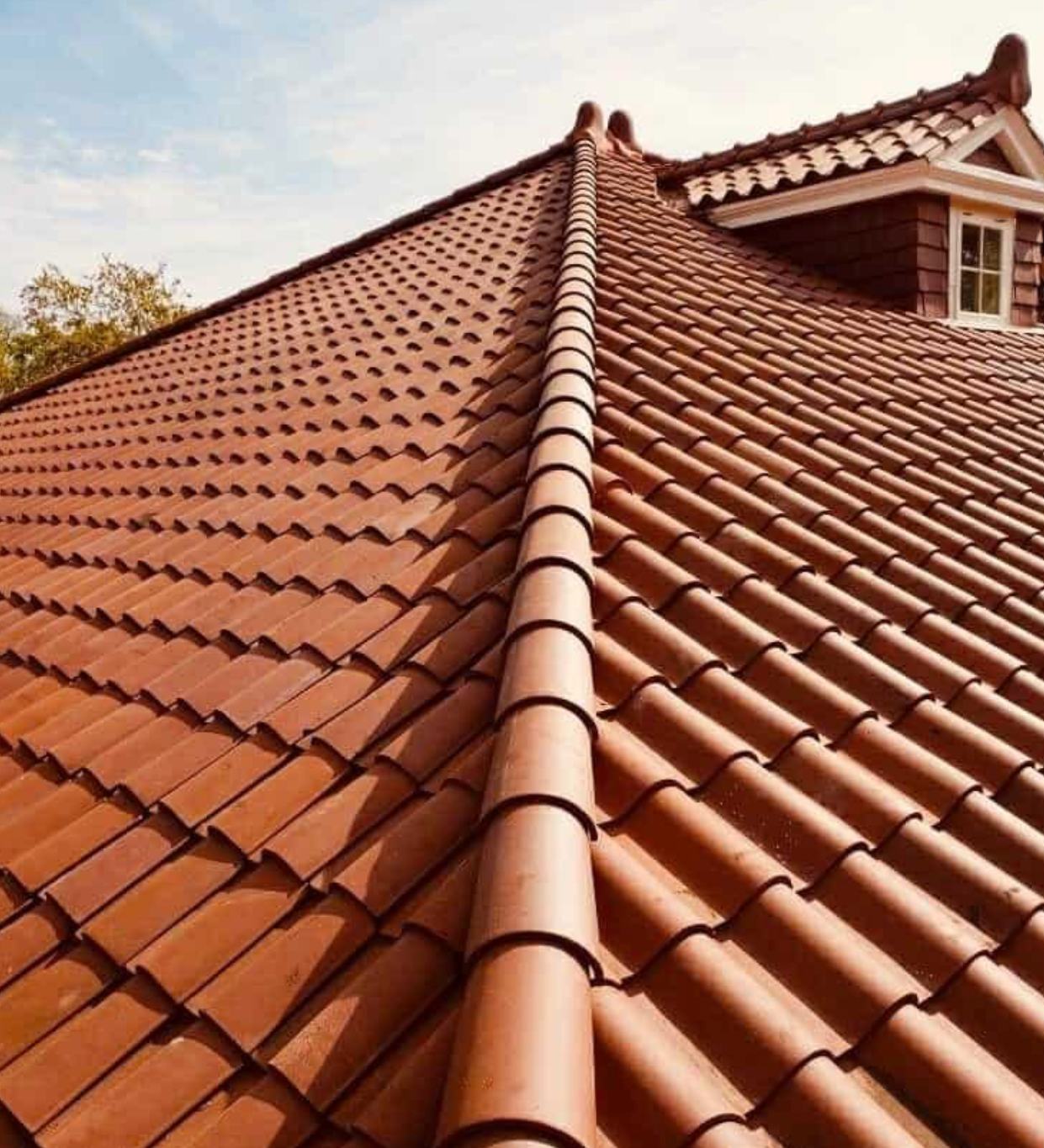
Few materials shape a home's personality like tile. The deep barrel-and-pan shadow lines of a Spanish or Mediterranean clay roof, or the crisp profile of a flat concrete tile mimicking slate, give a home an unmistakable presence. In West Michigan, tile is rare enough that it stands out; you'll spot it mostly on custom homes in Ada, Forest Hills, and along the lakeshore, where the architecture leans Mediterranean or European.
Clay tile keeps its color for the life of the roof because the color is fired into the material, not coated on. Concrete tile is surface-colored, which can soften over decades, but it offers a far wider range of profiles and shades, including convincing shake and slate looks. Both come in flat, low-profile, and high-barrel shapes.
Our honest position up front: tile is a specialty product in this market, and our climate is genuinely hard on it. If the tile aesthetic is what you love, modern composite tiles replicate the look at a fraction of the weight and none of the freeze-thaw gamble, and for most West Michigan homes chasing character and longevity, the conversation ends up at composite, standing seam metal, or designer asphalt. We'll lay out all of them honestly, including real tile, and let your home decide. We're not here to sell you a roof you don't need.
Clay vs. Concrete vs. Composite
"Tile" covers three very different materials. Here's how they compare on cost, lifespan, and, critically for our climate, weight and water.
Clay Tile
Market range $12 to $25 per sq ft installed — Lifespan: 60 to 100 years
Kiln-fired natural clay, prized for terracotta color that never fades and unmatched longevity. The heaviest option, often 900 to 1,200 pounds per square, and the least forgiving of the wrong grade: only severe-weathering tile belongs anywhere near a Michigan winter.
Concrete Tile
Market range $10 to $20 per sq ft installed — Lifespan: 40 to 75 years
Molded from sand, cement, and water, then color-coated. Costs less than clay and mimics clay, shake, or slate at 600 to 1,100 pounds per square. The honest catch: concrete absorbs 10 to 13 percent of its weight in water, versus under 6 for quality clay, and in a freeze-thaw climate that absorbed water is the enemy. A soaked concrete roof also temporarily carries an extra 80 to 150 pounds per square that no brochure mentions.
Synthetic / Composite Tile
Roughly $9 to $16 per sq ft, priced on inspection — Lifespan: 40 to 50 years
Polymer composite tiles that replicate the tile look at 150 to 300 pounds per square, with UL 2218 Class 4 impact ratings and freeze-thaw engineered in. The practical way to get a tile aesthetic on a standard West Michigan roof deck, and the version we quote and install, from the same composite family as our synthetic slate and shake options.
Built to Outlast the Mortgage, If It's Built for the Climate
Tile is genuinely one of the longest-lasting roofing materials made. Quality clay serves 60 to 100 years, concrete commonly 40 to 75. Tile is non-combustible with a Class A fire rating, immune to insects and rot, and it never loses granules or curls the way shingles do.
The catch in our climate is water. When a porous tile absorbs moisture and that moisture freezes, it expands, and over the years it cracks, flakes, and spalls the tile from the inside. That's why grade is everything here. Clay roof tile is governed by ASTM C1167, which classifies tile into three grades: Grade 1 resists severe frost action, Grade 2 moderate, and Grade 3 essentially none. Only Grade 1 belongs on a Michigan roof. Concrete tile is governed by ASTM C1492. A tile that performs beautifully in Arizona or on a Mediterranean villa can fail in a single Grand Rapids winter, and imported tile is where that mistake usually gets made.
Two more truths the brochures skip. First, the tile usually outlives the underlayment beneath it. On a long-lived tile roof, the tile is really a rain screen and the waterproofing underlayment does the heavy lifting, so that layer gets replaced once or twice over the roof's life, a careful lift-and-relay job that demands tile-specific expertise. Second, and this one is specific to living here: federal building guidance recommends against clay tile in high-snow-load regions partly because the roof can't take snow removal without damage. We remove snow from West Michigan roofs every winter, it's one of our services, and tile is the one roof where walking it to clear it risks cracking it. In lake-effect country, that's not a footnote.
Ranges are planning estimates, not quotes, and assume tear-off, premium waterproofing underlayment, flashing, and disposal. Structural reinforcement, where real tile needs it, is priced separately after an engineer's review.
Where Tile Shines, and Where It Doesn't
What Tile Handles Well
- Extreme longevity, often a lifetime or two
- Class A fire resistance, non-combustible
- Immune to rot, insects, and UV degradation
- High wind ratings when properly fastened
- Excellent thermal mass, steadier attic temperatures
- Color that lasts, clay especially
Where It Needs Care in Michigan
- Freeze-thaw cracking unless the tile is Grade 1 severe-weathering rated
- Heavy dead load stacked under a heavy snow load
- Individual tiles crack under foot traffic, including winter snow removal
- Underlayment replacement once or twice over the roof's life
The Weight Question Comes First
This is the single most important factor for tile in West Michigan. A clay or concrete tile roof weighs three to five times what asphalt does: roughly 600 to 1,200 pounds per square against 250 to 400 for architectural shingles, several tons of dead load across a whole roof, before the first flake of lake-effect snow lands on top of it.
Most homes around Grand Rapids, Holland, and Hudsonville were framed for asphalt. Dropping tile onto that structure without verifying capacity isn't a shortcut, it's a safety risk. Any real tile conversation starts with a structural engineer confirming the rafters, trusses, and load path can carry the tile plus a full snow load, and reinforcement, where it's needed, is a real cost most homeowners never see coming.
- Engineer's structural review of the framing
- Possible rafter or truss reinforcement
- Verification of the snow-load rating
- Or a lightweight composite tile that skips the whole question
On most homes, composite tile or a standing seam metal roof delivers the look or the longevity without the structural bill, and we'll show you the numbers side by side.
Is Tile Right for a West Michigan Roof?
Tile can work here, but only when everything is specified for the climate and the structure is up to it. Four factors decide the outcome.
Freeze-Thaw Durability
West Michigan sees dozens of freeze-thaw cycles each winter. Only ASTM C1167 Grade 1 clay, the severe-weathering rating, resists the cracking that porous tile suffers when absorbed water freezes, and the rating needs to be confirmed on the manufacturer's spec sheet, not assumed.
Snow and Ice Load
Lake-effect snow piles on fast, and a tile roof adds tons of dead load before winter starts. The framing has to be engineered for both together, and the snow itself can't be cleared off tile the way it can off shingles or metal.
Structural Weight
Most existing homes here were framed for asphalt. Real tile usually means an engineer's review and often reinforcement, a real cost that belongs in the decision from day one, not discovered at the quote.
Underlayment Is Everything
In a cold, wet climate the tile is the rain screen and the underlayment is the roof. Ice and water shield and a premium high-temperature underlayment are non-negotiable under Michigan tile, because that layer is what's actually keeping the water out for the next half century.
Tile Roofing vs. Asphalt Shingles
For most West Michigan homes, the real choice is tile versus the local standard. Here's the side by side.
| Feature | Clay or Concrete Tile | Architectural Asphalt |
|---|---|---|
| Installed cost | Market range $10 to $25 per sq ft, before structural work | $5 to $10+ per sq ft |
| Lifespan | 40 to 100 years by material and grade | 20 to 30 years rated, 30 to 35 achievable done right |
| Weight per square | 600 to 1,200 lb | 250 to 400 lb |
| Structural reinforcement | Often required | Not needed |
| Fire resistance | Class A, non-combustible | Class A on the products we install |
| Freeze-thaw concern | Needs Grade 1 rated tile | Low over a proper system |
| Winter snow removal | Risks cracking tiles | Routine |
| Common in West Michigan | Rare, custom homes | The standard |
The takeaway: tile wins on lifespan and character, asphalt wins on cost, weight, and everyday practicality for this climate. Compare all your options on our asphalt shingles and metal roofing pages.
What Tile Roofing Costs in West Michigan
Installed tile runs a market range of roughly $10 to $25 per square foot, two to three times an asphalt roof, and that's before the structural engineering and any reinforcement a Michigan home commonly needs, which is priced separately after the engineer's review. Composite tile runs roughly $9 to $16 and skips the structural bill entirely. A tile roof is a lifetime investment spread over many more decades than a shingle roof, and like every roof we quote, the only firm number comes after an on-site inspection, because whole-house figures mean nothing until the roof is measured.
Plan Your Roof ReplacementOur Honest Take on Tile in West Michigan
Tile is a beautiful, generational roof, and for the right home, the right structure, and the right budget, it's a worthy investment. It's also a specialty product in our market with real climate strikes against it, and we'd rather tell you that on this page than after you've fallen for a tile that was fired for a climate two thousand miles south of here.
Tile tends to be the right call when:
- Your home's architecture genuinely calls for it, Mediterranean, Spanish, European
- The framing already carries the weight, or you're prepared to reinforce it
- You want a true lifetime roof and plan to stay long-term
- The tile is confirmed ASTM C1167 Grade 1 severe-weathering rated
- You value a distinctive, high-end look over lowest cost
- A structural engineer has confirmed the tile-plus-snow load
For everyone else drawn to the look, composite tile, standing seam metal, and designer asphalt get you the character without the structural project or the freeze-thaw gamble. Curious which fits your home? Schedule your free roof inspection or call or text (616) 840-1927 and we'll walk the options with you, honestly.
Compare Roofing Materials & Services
Metal Roofing
The premium long-life option most West Michigan homes choose over tile.
Learn MoreAsphalt Shingles
The most popular, best-value roofing option here.
Learn MoreSlate Roofing
The other century roof, and its practical synthetic twin.
Learn MoreRoof Replacement
Our full tear-off and new roof installation service.
Learn MoreTile Roofing Questions
How long does a tile roof last in Michigan?
Quality clay tile serves 60 to 100 years and concrete tile 40 to 75, provided two things: the tile is rated for severe weathering, ASTM C1167 Grade 1 for clay, and the underlayment beneath it is built and maintained like the working roof it actually is. In our freeze-thaw climate, tile that isn't cold-rated can start cracking and flaking within a few winters, no matter what it cost.
Can clay tile handle West Michigan winters?
Only the right clay tile. Grade 1 severe-weathering tile absorbs under 6 percent water, so there's little inside to freeze and crack it, and it performs well here structurally when the framing is engineered for it. Lower-grade or warm-climate imported tile fails fast in our winters. One more Michigan-specific reality: heavy snow can't be cleared off tile the way it can off shingles or metal, because walking a tile roof cracks tiles, and federal building guidance recommends against clay tile in high-snow-load regions for exactly that reason.
How much does a tile roof cost in West Michigan?
Clay runs a market range of roughly $12 to $25 per square foot installed and concrete $10 to $20, before structural engineering and any reinforcement, which many Michigan homes framed for asphalt need. Composite tile runs roughly $9 to $16 with no structural work. Final numbers depend on the roof's size, pitch, complexity, and framing, and we confirm every figure with an on-site inspection.
Does my house need reinforcement for a tile roof?
Often, yes. Real tile weighs 600 to 1,200 pounds per square, three to five times asphalt, and that dead load sits under a full lake-effect snow load all winter. Any real tile project starts with a structural engineer confirming the rafters, trusses, and load path, and reinforcement is common on homes framed for shingles. Composite tile weighs 150 to 300 pounds per square and installs on standard framing, which is exactly why most homeowners who love the look end up there.
What's the difference between clay and concrete tile?
Clay is kiln-fired with the color baked through, so it never fades, lasts longest, and, in Grade 1 form, absorbs the least water, at the highest price and weight. Concrete is molded and surface-colored, costs less, offers more looks, and can soften in color over decades, and its higher water absorption, 10 to 13 percent versus under 6 for quality clay, makes freeze-thaw a bigger factor here. In this climate, if it's real tile, the grade and the absorption number matter more than the material name.
Is composite tile as good as real tile?
For most West Michigan homes, it's the smarter version of the same look. Composite runs 40 to 50 years, carries a Class 4 impact rating that real tile can't match since stone and fired clay crack under hail and foot traffic, weighs a fraction as much, and is engineered for freeze-thaw instead of gambling on it. What it gives up is the century lifespan and the authenticity of fired clay. We'll put samples of both in your hands and let you judge from the curb, where it counts.